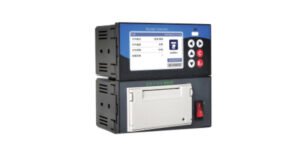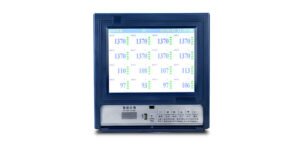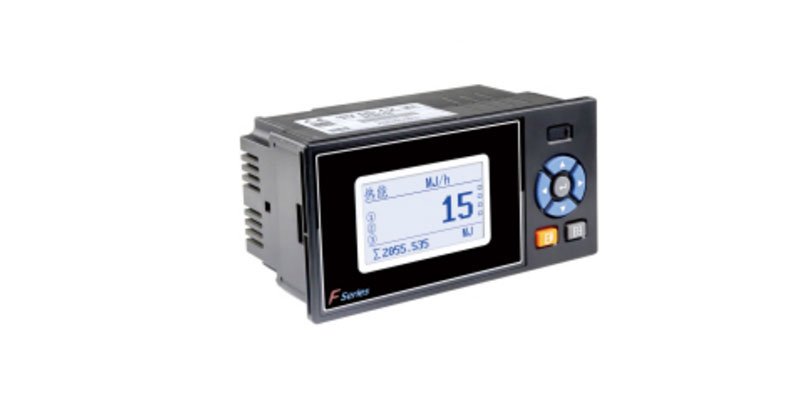
In energy management and trade settlement scenarios such as steam and heating supply, heat totalizers are key terminals for thermal energy parameter collection and accurate metering. The GT32HF Heat Totalizer is based on an ARM processor, paired with flow transmitters and sensors. It not only completes flow measurement but also realizes precise calculation of thermal energy for heat fluids. Meanwhile, it integrates full-process functions such as data collection, display, control, and remote transmission, serving as an efficient tool for enterprise energy management and cost accounting.
1. Core Product Positioning and Application Value
The GT32HF is a precision steam thermal energy totalizer. Its core logic is to use the computing power of the ARM processor, combined with the collection of signals such as flow, temperature, and pressure, to complete flow statistics and heat calculation for heat fluids. Its functions cover on-site parameter collection, real-time data display, automatic control output, remote communication transmission, report printing, etc., and can independently form a digital collection and monitoring system.
The core application value of this device lies in: adapting to trade settlement and metering management scenarios, realizing online metering of heating supply, and providing data support for enterprises’ energy management, energy consumption metering, and technical and economic analysis. It is especially suitable for thermal energy statistics and cost accounting of media such as steam and heat fluids.
2. Core Product Features: Functional Advantages for Multi-Scenario Adaptation
The functional design of the GT32HF focuses on the practicality and flexibility of industrial metering, with core features including:
- Wide Adaptability: The flowmeter has a wide application range, supports automatic conversion of flow units, and the flow coefficient of differential pressure flowmeters can be calculated automatically, adapting to different types of flow measurement needs;
- Trade Settlement Capability: Supports the combined use of high and low temperature flows, meeting the trade settlement accuracy requirements under different working conditions;
- Emergency Compensation Function: Can perform compensation calculations on parameters when temperature/pressure is abnormal, avoiding metering deviations under abnormal working conditions;
- Debugging and Audit Support: Supports viewing the original signal values of transmitters/sensors and intermediate parameters (density, enthalpy, etc.) in heat calculation. It also has audit records and power outage records, facilitating data traceability and equipment maintenance;
- Multi-Dimensional Alarm: Supports instantaneous or cumulative alarms for parameters such as flow, thermal energy, temperature, and pressure, providing timely early warning for abnormal working conditions;
- Data Management and Communication: Has functions for standard cumulative flow, daily/ monthly thermal energy reports, supports RS485 and RS232C communication interfaces and Modbus RTU protocol, and can connect to upper computer systems to realize remote data transmission and centralized management;
- Transmission Expansion: Supports standard current transmission output, and the signal source can be flexibly selected, adapting to different linkage control needs.
3. Core Technical Parameters and Hardware Configuration
3.1 Basic Hardware and Computing Capability
- Display and Processor: Equipped with a 128*64 dot-matrix gray-white LCD display, with both real-time display accuracy and recall accuracy reaching ±0.2%F.S.; adopts a high-performance ARM Cortex-M3 32-bit RISC core to ensure the efficiency of multi-parameter calculation and data processing;
- Power Supply and Power Consumption: Supports three power supply methods: 220VAC/50Hz AC power supply, 24VDC DC power supply, and 12VDC DC power supply, adapting to the power supply conditions of different industrial scenarios;
- Environment and Size: Operating temperature range 0~50℃, humidity 0~85%RH, altitude ≤2000 meters, adapting to most industrial on-site environments; the net weight of the instrument is ≤1.0Kg, meeting the lightweight installation requirements of industrial instruments.
3.2 Signal Input and Output Capabilities
- Input Functions:
Covers three core channels: the flow channel supports 4-20mA, 0-10mA analog signals and frequency signals; the temperature channel supports 0-10mA, 4-20mA analog signals and Pt100 thermal resistance signals; the pressure channel supports 0-10mA, 4-20mA analog signals, which can adapt to most industrial sensors and transmitters;
- Output Functions:
Includes power distribution output (1 group of 12VDC + 2 groups of 24VDC sensor power supplies, maximum 30mA per channel), transmission output (1 channel of standard 4-20mA current, load capacity 500Ω), and relay output (2 channels, supporting configuration of upper/lower limits and upper/lower limit alarms), which can directly drive external actuators to realize parameter control and linkage.
3.3 Communication and Data Management
The communication function supports RS232C and RS485 interfaces, compatible with Modbus RTU protocol. It can not only connect to local printing equipment to output reports but also access enterprise-level metering networks to realize remote data transmission and centralized management. At the same time, it has a clock function with a clock error ≤±2 seconds/day, ensuring the accuracy of time-related data (such as daily reports and power outage records).
4. Product Value Summary: An Efficient Tool for Industrial Energy Management
The core advantages of the GT32HF Heat Totalizer lie in “precise metering + full-function integration + scenario adaptability”: the ARM processor ensures the accuracy of flow and heat calculation; multi-channel signal input adapts to different sensors; and the integration of alarm, report, and communication functions takes into account the accuracy, practicality, and traceability of industrial metering.
In terms of scenario adaptation, its design supporting multiple power supply methods, multi-parameter alarms, and emergency compensation can cover conventional industrial points and complex working conditions. The trade settlement capability and data report functions exactly match the needs of enterprise energy management and cost accounting, making it a cost-effective device in thermal energy metering scenarios for media such as steam and heat fluids, and providing reliable data support for enterprises’ energy consumption control and economic analysis.